What you wear for a professional headshot matters, but probably not for the reason most people think. The goal is not to dress in the most fashionable outfit you own. The goal is to wear something that supports your face, fits the way you want to be perceived, and still feels like you when someone meets you in person.
A strong headshot should feel current, polished, and believable. Good wardrobe choices help the image do that without stealing attention from your expression.
Start with where the headshot will be used
Before choosing colors or deciding whether to wear a jacket, think about the job the image needs to do. A LinkedIn headshot, a faculty portrait, an ERAS application image, and an acting headshot do not all ask for exactly the same thing.
A business or LinkedIn headshot usually needs to feel prepared, approachable, and current. A medical or academic headshot often benefits from cleaner, more conservative wardrobe choices. An acting or modeling image may leave a little more room for range, texture, or personality. If you are still working out the broader strategy, start with how to get the most out of your Gainesville headshot session before you finalize wardrobe.
What usually works best
For most professional headshots, simple works better than loud. Solid colors, subtle texture, and clean layers usually photograph well because they keep the focus where it belongs: on your face.
Shirts, blouses, sweaters, knit tops, jackets, and blazers can all work well when they fit properly and feel like a polished version of your normal style. Clothing should help create shape in the frame, not compete with the expression. A jacket can add structure. A simple top can feel more open and approachable. Texture can add depth without becoming distracting.
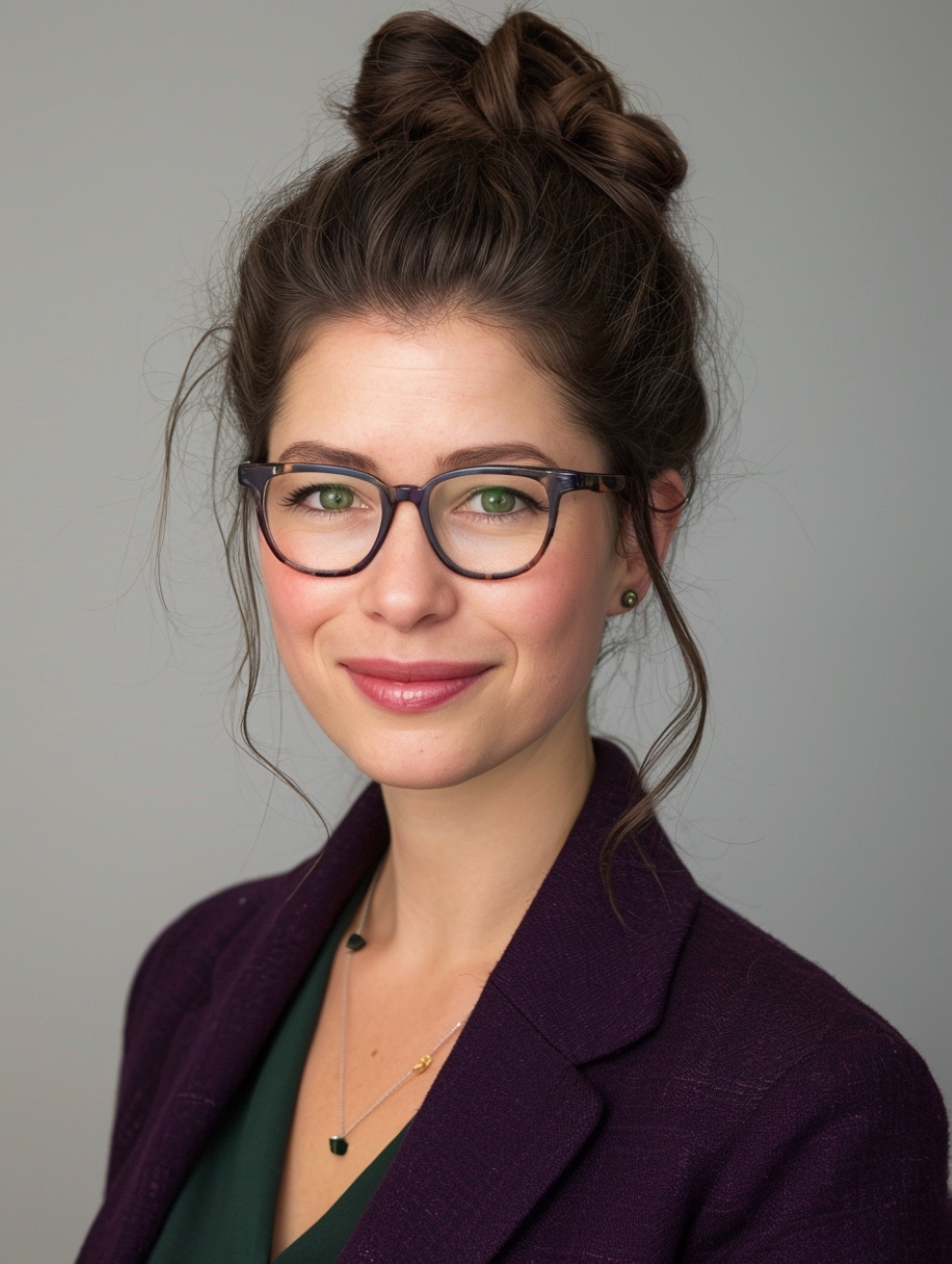
The image at the top of this article is a good example of why this works. The deep plum blazer adds shape and formality, the darker green top keeps the palette calm, and the simple necklace and glasses feel personal without becoming distracting. Nothing in the outfit fights for attention with the face.
What to avoid
Most wardrobe problems come from distraction. Busy prints, tiny stripes, bold logos, high-contrast patterns, wrinkled fabric, or anything that reads as costume tends to pull attention away from the face.
It is also usually better to avoid outfits that feel too tight, too loose, or just unfamiliar. If you spend the session adjusting your collar, tugging at a jacket, or worrying about whether something feels flattering, that tension often shows up in posture and expression.
Colors that usually photograph well
Mid-tones and richer muted colors tend to work well in headshots. Navy, charcoal, olive, soft blue, deep green, burgundy, cream, and earth tones are often reliable choices. They usually add shape without overwhelming skin tone.
Very bright neon colors, large blocks of pure white near the face, or heavy black-on-black outfits can be harder to balance depending on skin tone, background, and lighting. That does not mean they never work. It just means they need more care.
If you are unsure, bring two or three options that live in different parts of the same calm palette rather than gambling on one dramatic piece. Again, the featured example works because the colors feel rich and intentional, but still restrained enough that the portrait reads as professional first.
Should you wear a jacket?
Often, yes, but not always. A blazer or jacket can add clean lines and make a headshot feel more formal, especially for business, executive, medical, and academic use. It can also help posture read better in the frame.
That said, a jacket is not automatically the right choice for everyone. Some people look more natural and current in a well-fitted blouse, sweater, knit top, or collared shirt without another layer. If you are updating a LinkedIn or company-bio image, it is smart to bring both: one jacket option and one simpler option. That gives the session room to produce both a more formal image and a more approachable one.
Accessories, glasses, hair, and makeup
Accessories should support the portrait, not dominate it. Simple jewelry usually works better than oversized statement pieces. If you wear glasses regularly, bring them. Clean the lenses well before the session, and if you have more than one pair, bring the pair people most often associate with you professionally.
Hair and makeup usually work best when they look like a polished version of everyday you, not a dramatic reinvention. A headshot should still look like the person people meet in real life. That matters for professional, academic, and medical use especially. In the featured portrait, the glasses, subtle earrings, and softly finished makeup all help the image feel polished without looking overdone.
What to bring with you
Bring two or three wardrobe options if you can. That is usually enough to create variety without turning the session into a costume parade. A practical mix might include one more formal option, one slightly more relaxed option, and one backup in case a color or neckline does not work the way you hoped.
It also helps to bring a lint roller, a comb or brush, simple touch-up items, and any jacket or shirt on a hanger if it wrinkles easily. The less rushed you feel, the better the session tends to go.
Wardrobe by headshot type
LinkedIn and business headshots
These usually work best when the wardrobe feels polished, current, and straightforward. A blazer, jacket, collared shirt, blouse, or sweater in a solid or subtly textured fabric is usually a safe direction.
Medical, residency, and academic headshots
Conservative and clean is usually the right call. You generally want the image to feel prepared and professional without becoming stiff. If that is your use case, also review the medical residency headshot page so the wardrobe and crop choices support application use.
Acting and modeling headshots
These sessions can leave more room for range, but the same rule still applies: the clothes should support the face. Texture, layering, and small changes in tone can help create variety without making the image feel over-styled. If you are booking for casting or portfolio use, the acting and modeling headshot page is the best starting point.
The final rule
If you feel uncomfortable in it, the camera will probably notice. The best wardrobe choice is usually not the outfit that is most impressive on a hanger. It is the one that fits well, photographs cleanly, and lets you look like yourself on a very good day.
If you want a broader prep list beyond wardrobe, read the professional headshot prep checklist. And if you are ready to schedule, start with studio headshot sessions or go straight to studio headshot pricing.